Efficiency and Reliability Factors in Modern Solar Auxiliary Transformers
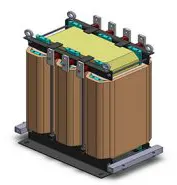
The Solar Auxiliary Transformer is among the renewable energy components that, although quietly, are vital in solar power plants’ smooth operations. The auxiliary transformer, besides being one step behind the scenes while solar panels are doing their thing by soaking up the sun and inverters turning it into usable power, is the one making sure that all the necessary support systems—monitoring, lighting, and cooling—are all running, and that is nothing but the best. It is like the plant’s energy-source enhancer, reliability-booster, and energy-loss trimmer at the same time.
Besides being so big and complex, the solar installations of the future will need the knowledge of the efficiency and reliability of the contemporary solar auxiliary transformers to optimize performance and convince the investors of the longevity of the technology.
What Is a Solar Auxiliary Transformer?
A Solar Auxiliary Transformer is used to provide power to the internal systems of the solar plant, which helps over time with no interruption. It is unlike inverters or grid transformers, as it takes care of the essential auxiliary loads that keep the plant working.
These acts are among the most important ones:
Fueling, lighting, HVAC (heating, ventilation, and air conditioning), a nd check rooms within the plant.
Keeping the voltage of auxiliary circuits stable.
Improving system reliability by allowing backup operations to continue.
Minimizing the time that the plant would not be running because power is not allocated efficiently.
To sum it up, the Solar Auxiliary Transformer makes sure that the whole solar power system works and is capable without any interruptions.
Why Efficiency and Reliability Matter in Solar Applications
Solar power systems rely heavily on the Solar Auxiliary Transformer to determine the performance of the entire plant. One of the important factors that the transformer has is high efficiency, which results in the least energy loss, whereas with reliability, it makes all the operations consistent even under the harshest environmental conditions. The two factors together dictate the life span and productivity of the solar project.
The main reasons are:
Energy Losses are Reduced
The higher efficiency of the transformer leads to the reduction of both transmission losses and core losses.
Operation is Continuous
The transformers that are reliable do not cause the shutdowns that are unexpected.
Maintenance Costs are Lower
The design that is durable leads to the reduction of both the downtime and the service costs.
Performance is Sustainable
Reliable support of the auxiliary functions by the constant supply of power.
Key Efficiency Factors in Solar Auxiliary Transformers
- Core Material: CRGO or amorphous core material application leads to a reduction in no-load losses.
- Winding Design: Savin copper or aluminum winding design enhances the conductivity.
- Load Handling: Uniform performance with variations in load conditions results in higher efficiency.
- Cooling System: State-of-the-art ONAN/ONAF cooling system allows for better temperature management.
- Insulation Quality: Top-grade insulation materials make energy leakage impossible.
- Magnetic Flux Optimization: Perfectly adjusted magnetic flow reduces the amount of energy lost.
- Compact Design: It not only cuts stray losses but also boosts thermal efficiency.
All these discussed attributes together give the Solar Auxiliary Transformer the desired maximum efficiency and reliability in modern solar applications.
Reliability Factors and Design Considerations
Solar Auxiliary Transformer's reliability is a fundamental factor that dictates its performance, more so in a situation where the Transformer is subjected to different environmental and operational conditions. Durability, failure, and ultimately a solar power system's reliability are influenced by a trained design and material characteristics, thereby deciding how long such a system will last. Quality of materials, precision in design, and protection against environmental stress are factors that will determine the reliability of the power transformer.
Some of the main factors that contribute to the reliability of a system are:
- Thermal Management: Good heat dissipation will avoid overheating and damage to the insulation.
- Moisture & Dust Protection: The life of the transformer is assured through the use of anti-corrosive coatings and sealed enclosures.
- Short-Circuit Strength: The mechanical structure is made strong enough to withstand electrical faults.
- Overload Capacity: The device can handle its highest loads without any negative impact on performance.
- Environmental Endurance: The transformer is designed in a way that it can continue to give its best under high temperatures, humidity, and outdoor exposure.
- Smart Monitoring Systems: IoT-based diagnosis for the periodical tracking of performance.
- Eco-Friendly Insulating Oils: Ester-based fluids further reduce the fire risk and eco-friendliness.
- Digital Twin Technology: Predictive care and fault detection are the two main features enabled by the technology.
- Compact Modular Designs: They occupy less space and make installation easier at solar sites.
- High-Efficiency Magnetic Cores: They are responsible for the reduction of core losses, which leads to the generation of energy of better quality.
- Noise Reduction Design: Enhances the comfort and safety of operation.
- Energy efficiency improvements: Ultra-low-loss cores and semiconductor materials as the ultimate solution for energy waste elimination.
- Environmentally friendly designs: The use of biodegradable ester oils and recyclable materials is an example of green manufacturing.
- Compact modular transformers: The new lightweight and space-saving designs are just what decentralized solar farms need.
- Improved grid connection: The flawless and quick blending of solar, wind, and battery systems is the key to hybrid energy models.
- Longer Lifespans: Better insulation and high-performance thermal designs leading to more reliable operation.
Modern Innovations Enhancing Transformer Performance
The modern Solar Auxiliary Transformers keep getting smarter, more efficient, and greener with the help of developing technologies. Solar infrastructures have improved their demands because of these innovations through monitoring improvements, less energy consumption, and operational life extension.
Some of the recent innovations are:
Efficiency Comparison
Modern Solar Auxiliary Transformers take the lead over the traditional designs by using top-notch materials and design optimization. They bring in higher efficiency, less power loss, and better cooling systems. State-of-the-art insulation, miniature builds, and intelligent monitoring functions cut down on maintenance requirements yet keep the performance at the desired level. Their efficiency is rated at 98-99% which means less downtime and a constant flow of energy even in the harshest solar conditions, unlike their conventional counterparts.
Installation & Maintenance Best Practices
Proper installation and maintenance are vital in prolonging the life of a Solar Auxiliary Transformer and also in ensuring steady performance.
It is expedient to install it in areas that are airy and free from moisture to avoid overheating.
It is necessary to maintain proper grounding and to firmly connect the wire.
Periodic oil testing and insulation resistance checks should be conducted.
Temperature, noise, and vibration levels should be controlled regularly.
Adhere to stop care schedules to spot problems early and minimize downtime
Expertise in Solar Auxiliary Transformers
Today's Solar Auxiliary Transformers have been built with top-notch engineering, the best materials, and the most efficient cores. They bring very dependability, low power losses, and no maintenance at all. Besides, these transformers are the backbone of solar power systems, providing uninterrupted operation along with long-term stability, perfect voltage regulation, and longevity in extreme environmental conditions.
Solar Auxiliary Transformers' Future Trends
The development of Solar Auxiliary Transformers is directing the renewable energy efficiency to the next era. As solar plants are built worldwide, new technologies make transformer solutions smarter, safer, and more eco-friendly.
The future of the trends is:
Digital transformation, Smart sensors, and Artificial Intelligence-based analytics for predictive care and patient monitoring at a distance.
Conclusion
Solar Auxiliary Transformers that are efficient and reliable are the need of the hour for the solar power plant to get the maximum output and sustain the system. Their state-of-the-art design, strong materials, and globally recognized standards meet the requirements for long-term efficiency and safety. These transformers, by concentrating on perfect energy conversion and formidable quality, support the continuous generation of renewable power. Thus, main the way for clean, reliable solar power methods of the future.
FAQs
What is the normal life expectancy of a Solar Auxiliary Transformer?
The thing will last about 25 to 30 years. If it is fixed, installed, and regularly kept.
How does core design affect energy loss?
The designer of the core has to consider very carefully the type of magnetic materials and their properties to make a lossless core, i.e., one in which hysteresis and eddy current losses are practically eliminated.
Are these transformers suitable for hybrid solar-wind plants?
Certainly, Solar Auxiliary Transformers are capable of serving both solar and hybrid energy systems with high-throughput performance.
How often should care be performed?
It is recommended that routine inspections and oil testing be done every six to twelve months.
Latest News
Electricity is arguably the most valuable resource we have in our mode...
Executing order for supply of multiple 10 to 100 KVA Lighting Transformers to Coal Mines in Odisha.
Supply of IP55 Solar Auxiliary Transformers to leading Solar EPC company in Gujarat.
Inauguration of new & upgraded facility.
Clientele



Inquire Now
If You have any question, just fill the contact form and we will answer you shortly.
